Patterns of Protest
2022–2023
Audio-Reactive Systems · Civic Choreography · Sonic Data
Overview
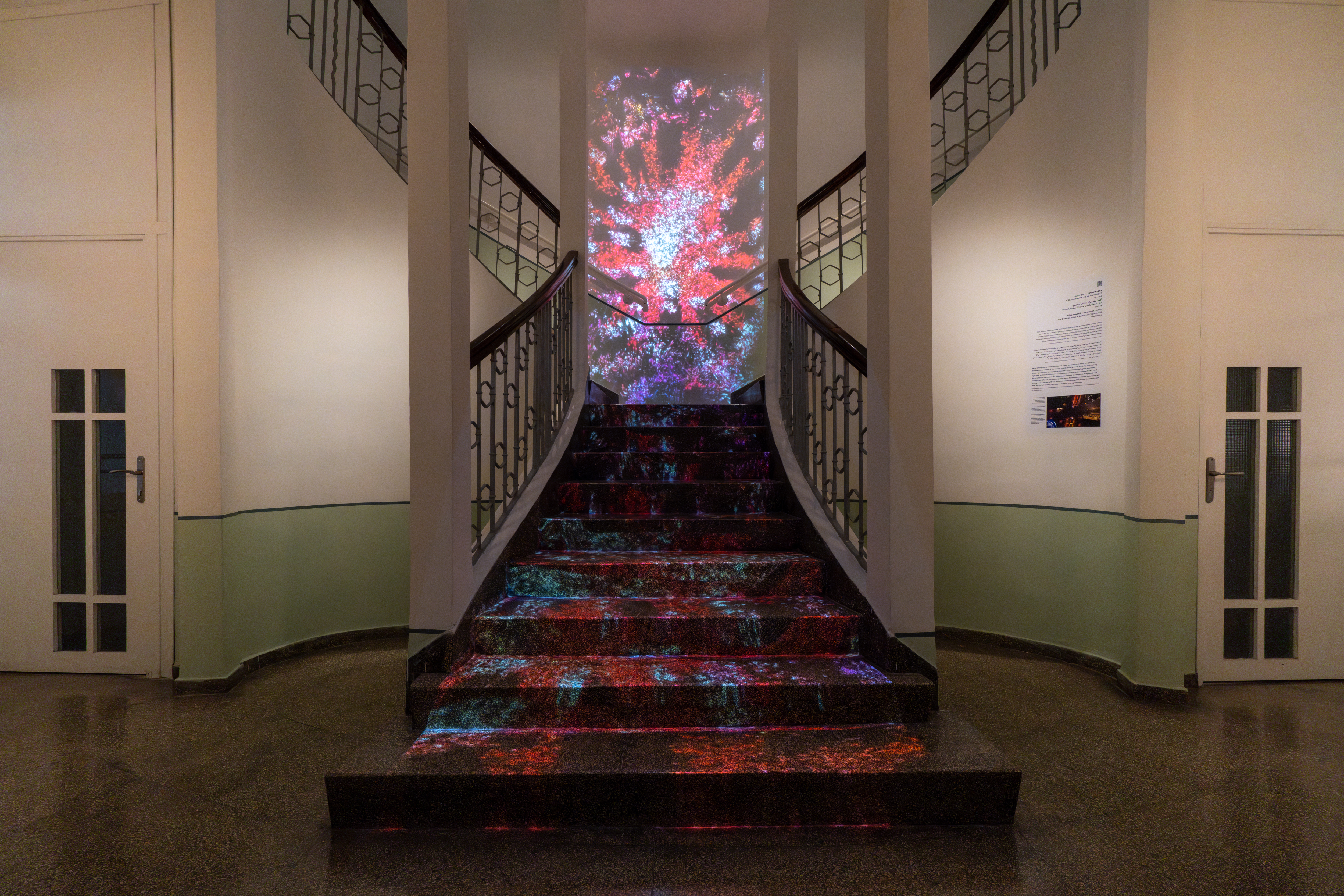
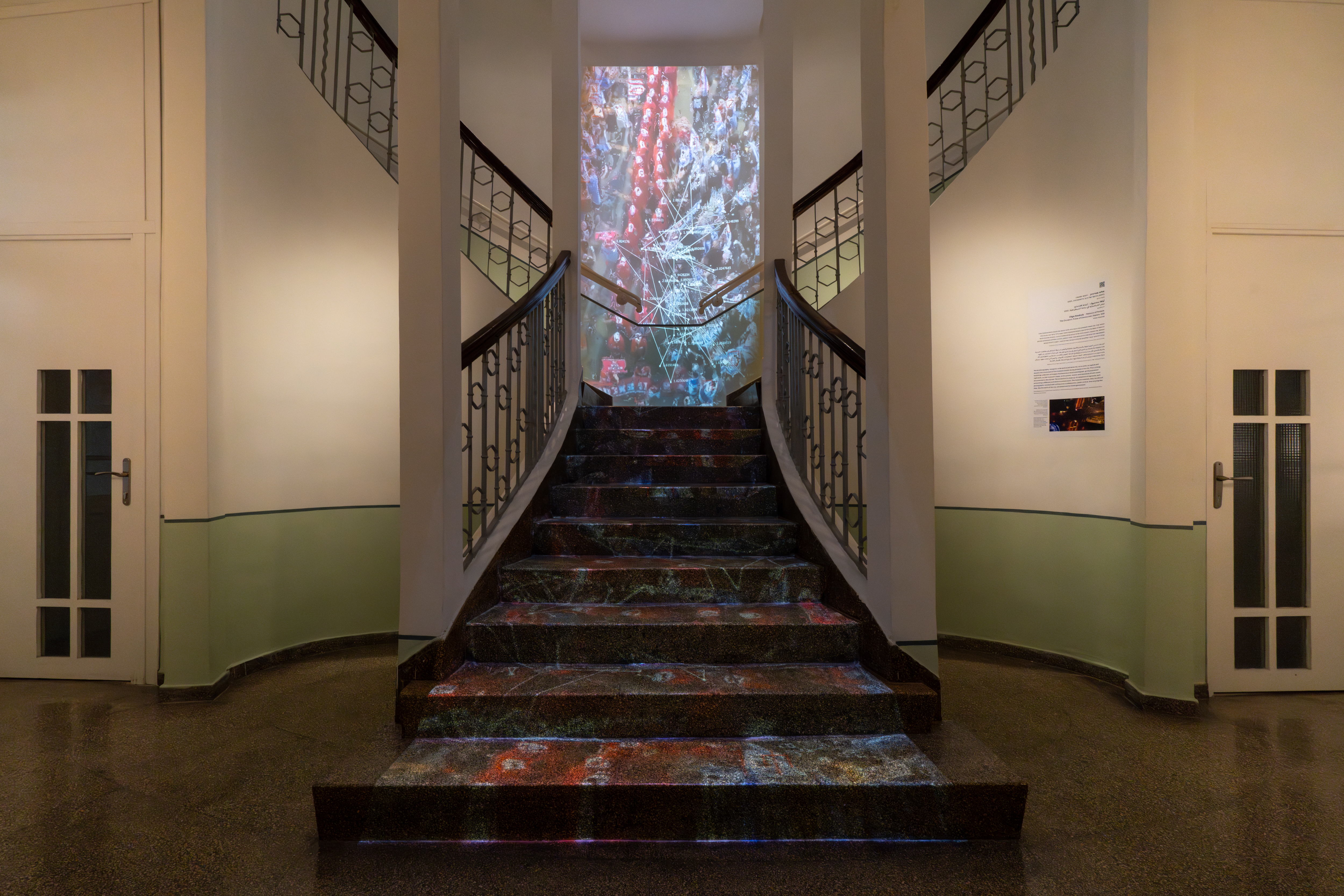
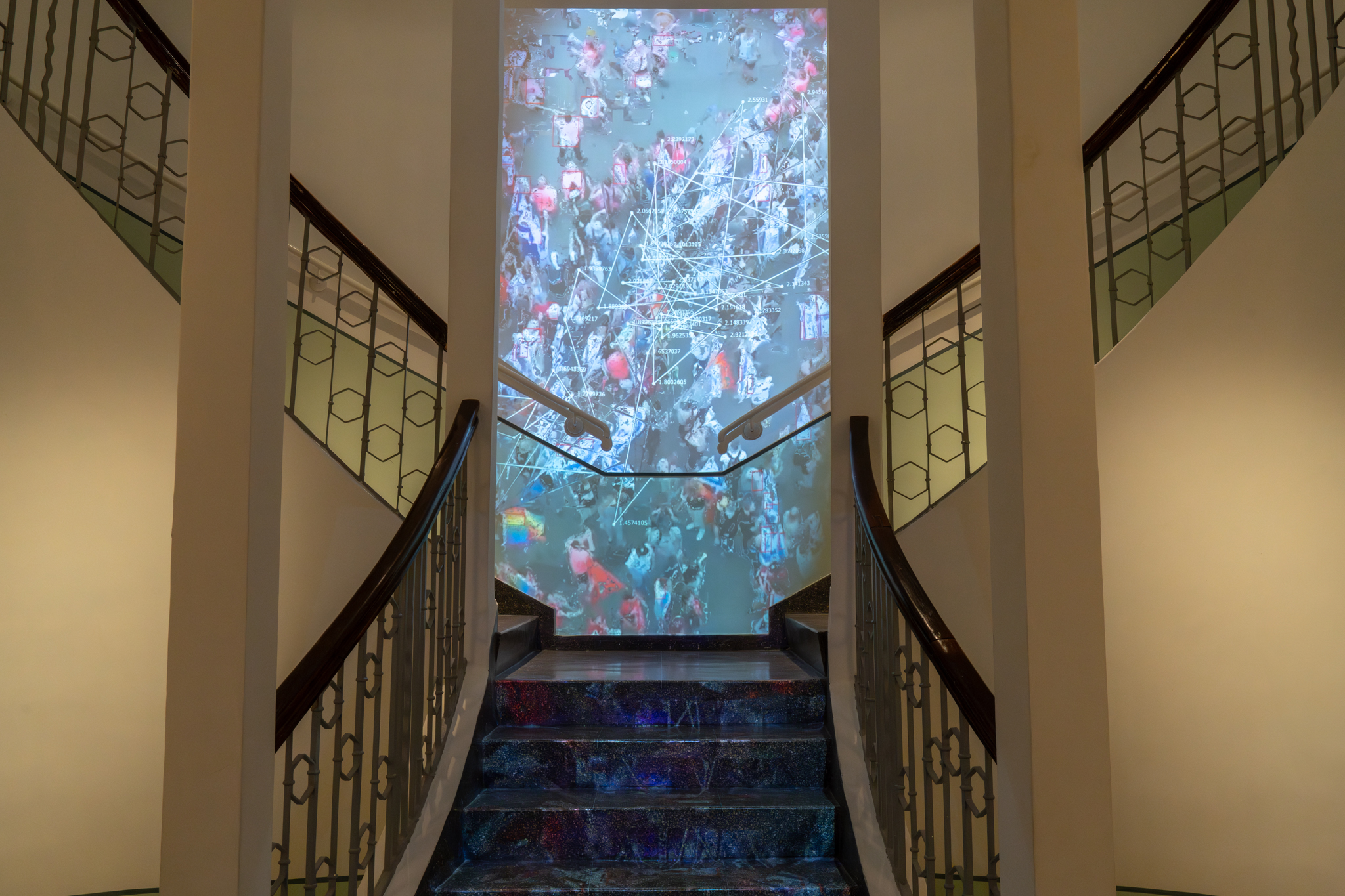
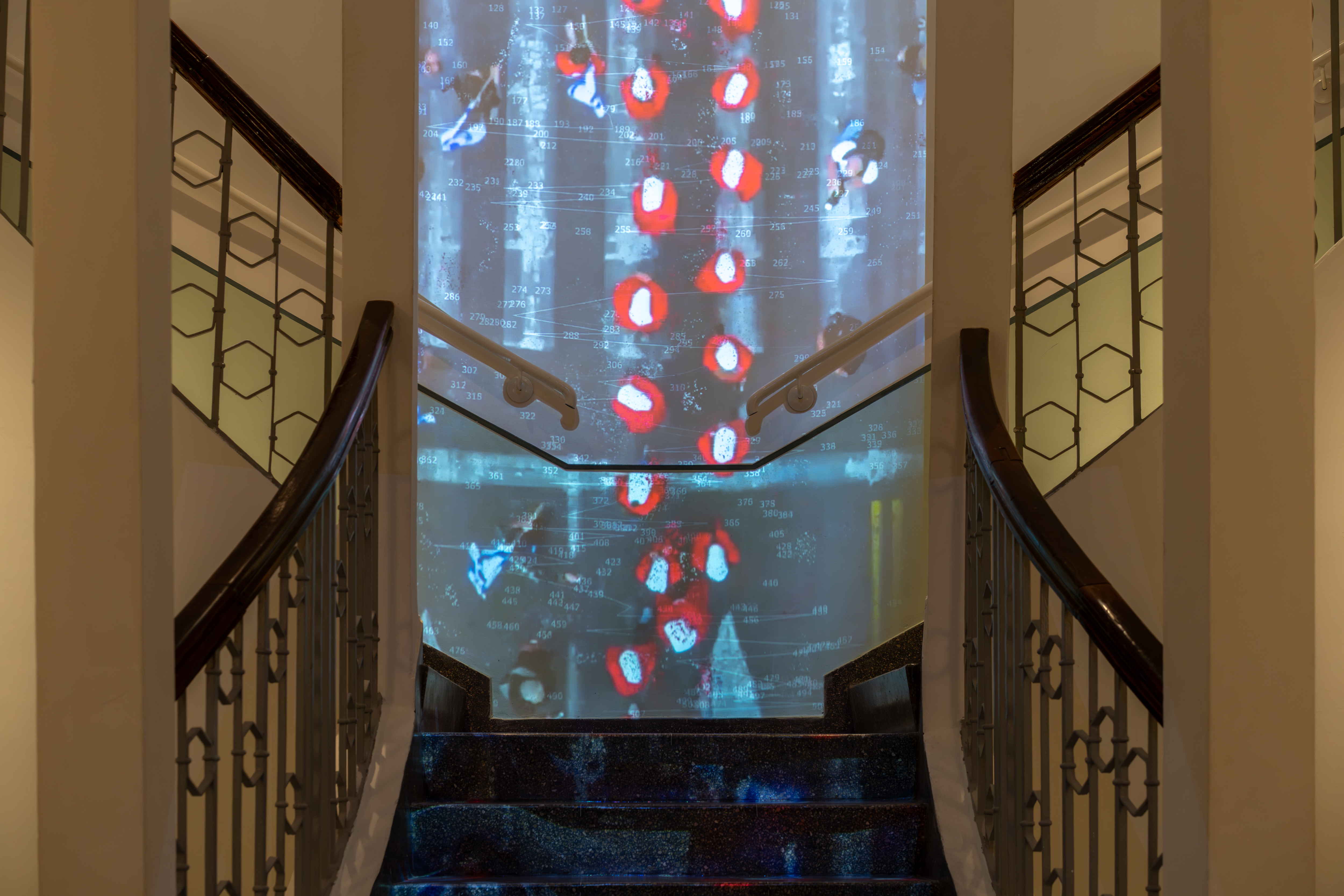
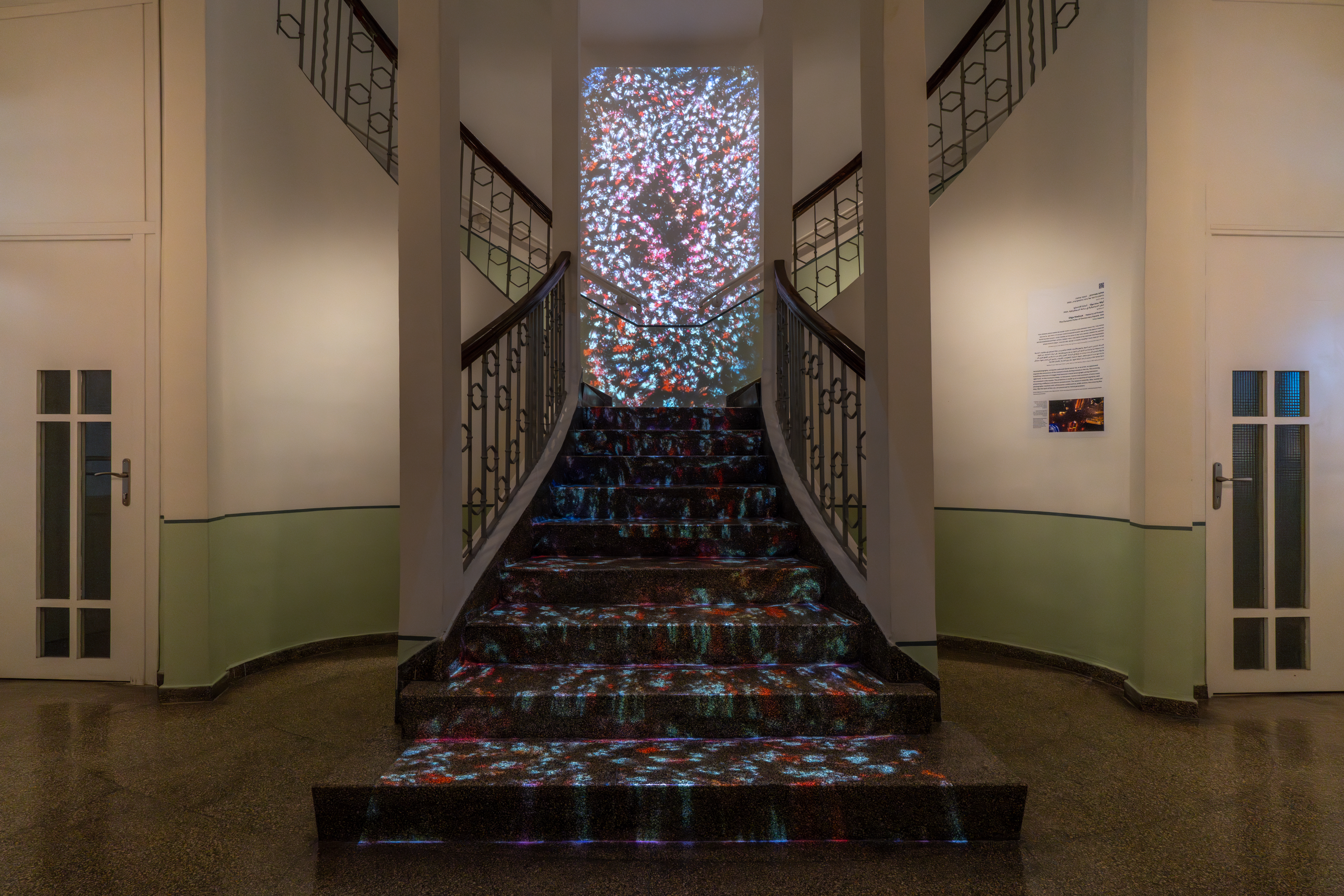
Patterns of Protest studies the ephemeral choreography of civil resistance. Presented as a central installation at the Tel Aviv City Museum, the work isolates the movement of protest from its political messaging, treating the crowd as a living, breathing spatial organism.
The project relies on a unique collaboration with The Democracy Archive, utilizing their exclusive aerial footage of mass demonstrations to trace the hidden geometries of collective action: how a chaotic group of strangers spontaneously organizes into patterns of flow, density, and reclamation.
The System: Sound as Driver
The visual language is not arbitrary; it is driven by the sonic reality of the street. Collaborating with sound artist Nir Jacob Yonessi, who captured field recordings from over 40 demonstrations, the project creates a generative feedback loop:
The Pulse (Audio Input): Raw field recordings, chanting, drumming, silence, and noise, serve as the data source.
The Reaction (Generative Process): An algorithm analyzes the audio frequencies in real-time. The intensity of the crowd's sound directly manipulates the visual parameters, distorting and reshaping the aerial imagery.
The Result: A visualization that "vibrates" with the energy of the protest, revealing the direct link between the sonic volume of a crowd and its physical presence.
Concept: Spatial Authorship
The project positions protest as a form of Spatial Authorship. When bodies take over a street, they rewrite the city's logic. Traffic lines become gathering spots; open plazas become fortresses. The work visualizes these ephemeral architectures, showing how individual vulnerability transforms into collective agency.
Video
Audio
This soundtrack is composed of field recordings captured across two years of protests. The audio served as background sound during the creation of the video work, affecting various parameters in the generative visuals.
Images
Context: Space vs. Time
This project acts as a companion piece to Anthropomass (2021):
Anthropomass: Focused on Space (The Fossil / Static accumulation).
Patterns of Protest: Focused on Time (The Pulse / Dynamic flow).
Together, they form a dual study of human-scale systems, archiving both the weight and the rhythm of democracy.
Exhibition & Credits
Venue: Tel Aviv City Museum (Main Entrance Installation)
Concept & Visuals: Olga Stadnuk
Sound Design & Field Recordings: Nir Jacob Yonessi (Based on 40+ documented protests)
Archival Sources: The Democracy Archive (Aerial Footage)
Photography: Daniel Hanoch